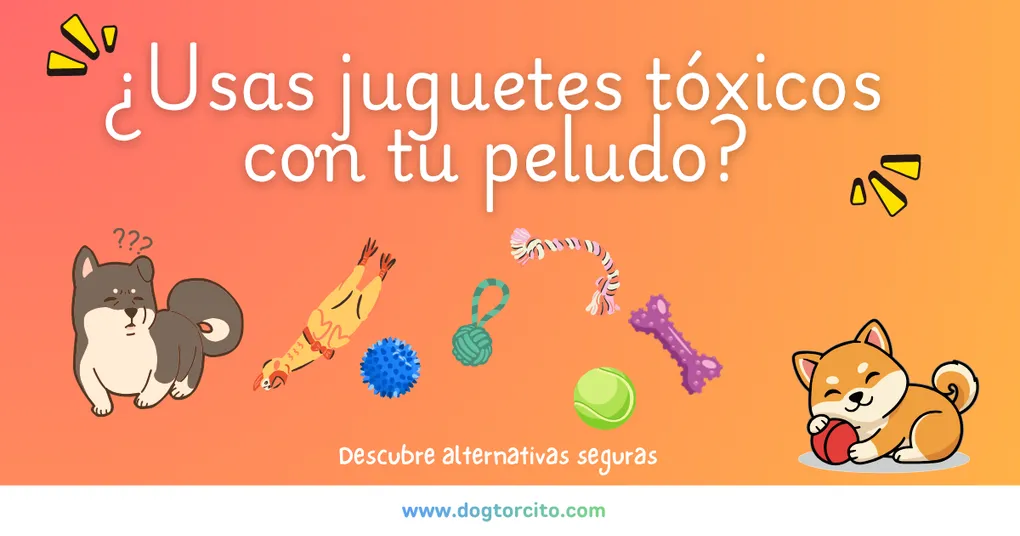
Pick the best toys for your dog: safe, durable and sustainable
Looking for toys that are safe, do not break in a minute, and are kinder to the planet? This guide explains what to avoid, what to choose, and gives you three ready-to-buy recommendations.
We cover the risks of the toys people usually give to dogs and, because solutions matter, we also offer safer and more sustainable alternatives.
Why avoid cheap plastic?
Whether balls, synthetic bones, simple chews, or squeaky chickens, many cheap plastic toys can be risky:
Main risks
- ✳️ Unwanted chemicals: Some plastics may contain BPA, phthalates, or other endocrine disruptors that leach with wear, heat, and saliva.
- ⚠️ Fragile and breakable: Low-quality toys splinter into small pieces that can cause choking, blockages, or even perforations if swallowed.
- 🌍 Microplastics: Constant wear releases particles that can end up in your dog’s stomach and in the environment.
- 🦷 Dental damage: Plastics that are too hard or have sharp edges can wear down or crack teeth.
- 🏷️ Zero traceability: Products without certifications rarely list materials, dyes, or how they were made.
How to choose safer toys
- Material first: Prioritize natural rubber, food-grade silicone, or high-quality nylon designed for chewers.
- Certifications: Look for BPA-, phthalate-, and heavy-metal-free, or compliance with EU (EN71) or FDA norms.
- Right size: Too small increases the risk of swallowing. It should be larger than the closed jaw of your dog.
- Smooth surface: Avoid glued pieces, plastic eyes, weak bells, or paint that chips.
- Replace on time: If you see cracks, burrs, heavy wear, or texture changes, retire it before it shreds.
Sustainable and enriching alternatives
- 🌿 Durable natural rubber: Stuffable for wet food and freezing.
- 🧵 Organic/recycled textile: Organic cotton or recycled fibers well braided (for non-destructive dogs).
- 🌲 Dog-safe wood: Roots or pressed wood made for dogs (not random park sticks that splinter).
- 🟤 Biodegradable materials: Cork balls or other certified options.
- 🧩 Slow-feeding interactive toys: Bamboo, sealed wood, or food-grade silicone.
- 🧠 Puzzles and dispensers: Stimulate the mind and control chewing.
Good usage practices
- 🔁 Rotation: Do not put every toy out at once; rotate weekly to keep interest and reduce simultaneous wear.
- 👀 Initial supervision: Watch how your dog uses a new toy to spot destructive habits.
- 🧼 Cleaning: Wash regularly with warm water and mild soap. Avoid harsh chemicals.
- 🍠 Enrichment: Use fillable toys for wet food, pumpkin puree, or functional snacks; it lowers anxiety and boredom.
In short: a toy should not just be “something to chew,” but a tool for dental health, emotional wellbeing, and cognitive enrichment. Safer, sustainable materials protect your dog and the planet.
Our picks: safe, durable, sustainable
Transparency note: some links are affiliate. If you buy through them, you help keep this project alive. The price is the same for you; it gives us a small boost to create more useful guides. 💛
1) Stuffable chew for calm chewing (safe and durable)
- 🎯 Ideal for: reducing anxiety, working scent, and promoting controlled chewing.
- 🌱 Material: durable natural rubber; can be stuffed with wet food and frozen.
- 💡 Why we like it: mixes enrichment + durability + easy cleaning.
- 📏 Recommendation: KONG Classic (pick size based on your dog’s weight).
👉 Safe buy: See KONG Classic on Amazon

KONG Classic — Stuffable, durable natural rubber, ideal for anxiety relief and enrichment. Choose the size according to your dog’s weight.

2) Alternative to the tennis ball (no abrasives, safer)
- 🚫 Problem with tennis balls: felt and abrasiveness can wear enamel; the core is not made for dogs.
- ✅ What to choose: natural rubber ball with controlled bounce and high visibility.
- 🌊 Why we like it: durable, easy to clean, no fibers that peel off.
👉 Safe buy: Natural rubber ball (tennis alternative)

Natural rubber ball — Controlled bounce, visible, and without abrasive felt. Safer than the classic tennis ball.

3) Alternative to rope / tug toys
- 🚫 Problem with ropes: fibers get ingested, quick wear, and bacteria buildup.
- ✋ What to choose: one-piece natural rubber tug with ergonomic grip.
- 🧽 Why we like it: comfortable in hand, resistant for intense play, more hygienic than rope.
👉 Safe buy: Natural rubber tug

Natural rubber tug — One-piece, ergonomic grip, more hygienic than classic rope toys.

Tip: rotate these toys during the week (enrichment, controlled fetch, interactive play) to balance physical and mental exercise.
Quick comparison
Toy type | Common risk | Safer alternative |
|---|---|---|
| Tennis ball | Dental abrasion, loose fibers | Natural rubber ball |
| Ropes | Fiber ingestion, poor hygiene | One-piece natural rubber tug |
| Cheap plastic | Fragmentation, chemicals | Natural rubber / food-grade silicone |
Frequently asked questions (FAQ)
How often should I replace a toy?
As soon as you see deep cracks, burrs, texture changes, or loose pieces. Even natural rubber needs replacing for safety.
Are tennis balls bad for dogs?
They are not designed for canine use: felt can be abrasive and the core is not suitable. A natural rubber ball is safer.
How do I clean toys?
Warm water and mild soap. Avoid harsh chemicals. Stuffable toys can be hand washed with a small brush.
Share this guide
Was this guide useful? Share it with your family or dog group and help more dogs play safely.