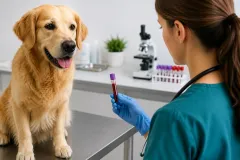





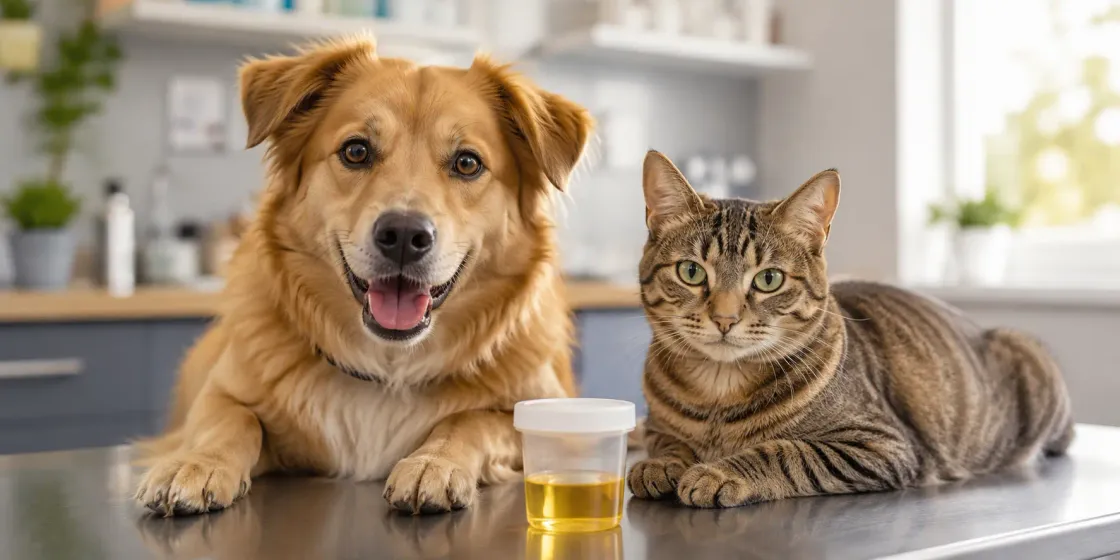
Urinalysis in dogs and cats is a small test with a lot of information. It helps assess hydration, urine concentration, protein, glucose, ketones, sediment, crystals, blood and clues of infection. It is often important with increased thirst, more urination, accidents at home, kidney concerns, diabetes or senior and feline checkups.
Important: this article is educational and does not replace veterinary diagnosis or treatment. If signs are severe, appear suddenly or your pet worsens quickly, contact a veterinary clinic.
Editorial note: Written by the Dogtorcito team using veterinary references from the Merck/MSD Veterinary Manual and Cornell University College of Veterinary Medicine on urinalysis, and AAHA on preventive monitoring in senior dogs and cats. Last reviewed: May 20, 2026.
Quick summary
| What you notice | Why it matters | Next step |
|---|---|---|
| Drinking and urinating more | Urine specific gravity shows whether the kidney concentrates urine well. | Blood work plus urine often gives better context. |
| Blood, pain or accidents | Sediment may show inflammation, crystals or bacteria. | Seek care soon; a male cat with a urinary blockage is an emergency. |
| Diabetes or kidney disease | Glucose, ketones and protein help monitor risk. | The vet may request culture or protein/creatinine ratio. |
What urinalysis is for exactly
The result is not interpreted as a simple list of “normal” or “bad”. The veterinarian reads it with the physical exam, age, signs, blood work and the way the sample was collected.
- Urine specific gravity: gives clues about hydration and the kidney’s ability to concentrate urine.
- Glucose and ketones: may appear with diabetes or metabolic decompensation, and usually need interpretation with blood glucose.
- Protein: may be related to kidneys, inflammation, blood, infection or other problems; persistent protein may be quantified with a protein/creatinine ratio.
- Sediment: lets the clinic look for cells, crystals, casts, bacteria and other findings under the microscope.
- Culture: helps confirm urinary infection and choose an antibiotic when appropriate.
When to worry and call the vet
- Cat straining with little or no urine.
- Visible blood, severe pain or crying while urinating.
- Lethargy, vomiting or appetite loss with urinary signs.
- Possible diabetes with weakness, high thirst or weight loss.
How to collect the urine sample
Always ask your clinic if it needs a specific type of sample. For basic screening, a home-collected sample may be useful; for culture, the veterinarian may prefer a sterile sample.
- Use a clean container and avoid touching the inside of the pot or lid.
- Try to bring a fresh sample; if you cannot deliver it right away, refrigerate it and ask the clinic how long it accepts samples.
- Do not use urine from the floor, bedding or a dirty surface because it contaminates easily.
- In dogs, a short leash may help you collect a midstream sample when possible.
- In cats, the clinic may recommend non-absorbent litter, a clean tray or collection at the clinic.
- Note the approximate time and how the sample was collected.
Adhesive urine collection bags: when they may help
Adhesive urine collection bags, similar to those used in pediatrics, may help in some cases when collecting a urine sample at home, especially if your veterinarian only needs a screening sample to check color, volume or a basic urinalysis.
They are not always easy to use in dogs and cats: hair can make adhesion difficult, the sample may be contaminated and many animals do not tolerate them well. For culture or when a sterile sample is needed, the clinic may recommend other collection methods.
Do not use them on irritated skin, do not leave them on for too long and confirm with your veterinarian first whether this method is suitable for the test they want.

What the veterinarian may check
- Urine specific gravity with a refractometer.
- Dipstick: pH, protein, glucose, ketones, bilirubin and blood.
- Sediment: cells, crystals, casts and bacteria.
- Culture when infection must be confirmed and antibiotics selected.
For more context, also see veterinary tests.
What some results may mean
Do not try to diagnose at home with a dipstick. Some findings change a lot depending on urine concentration, collection method, time since collection and the pet’s overall condition.
| Finding | What it may suggest | Why it should not be read alone |
|---|---|---|
| Very dilute urine | More water intake, kidney disease, hormonal changes or other causes. | It needs comparison with blood work, hydration and signs. |
| Glucose | Diabetes, stress in some cats or other problems. | It should be checked with blood glucose and clinical context. |
| Protein | Inflammation, blood, infection or kidney protein loss. | It may need sediment review and protein/creatinine ratio. |
| Crystals | pH changes, concentration changes or urinary risk. | Crystals do not always mean stones and may be affected by sample handling. |
| Bacteria | Possible urinary infection. | Voided samples can be contaminated; culture helps confirm it. |
What to record at home
- Frequency and amount of urine.
- Accidents, straining, pain or color changes.
- How much water your pet drinks if you can estimate it.
- Collection method and approximate time of the sample.
If your pet drinks more, urinates differently or has kidney checkups, saving dates, signs, results and medication helps make the trend clearer. In Dogtorcito, you can keep that history beside reports, weights, treatments and reminders so it is ready for the appointment.
How Dogtorcito helps
Dogtorcito works as your pet health notebook: it records changes, stores reports, creates reminders and helps you share clear information with the clinic when needed.
FAQ
Can I bring a sample collected at home?
Sometimes yes, especially for screening. For culture, the veterinarian may prefer a sterile sample collected by cystocentesis or another clinic method.
Does normal urine mean perfect kidneys?
Not always. Urine is interpreted with blood work, blood pressure, age, signs and the exam.
How quickly does a sample degrade?
Fresh is best. Merck notes that urine should be evaluated promptly and, if that is not possible, may be refrigerated for a limited period; still, ask your clinic for its protocol.