




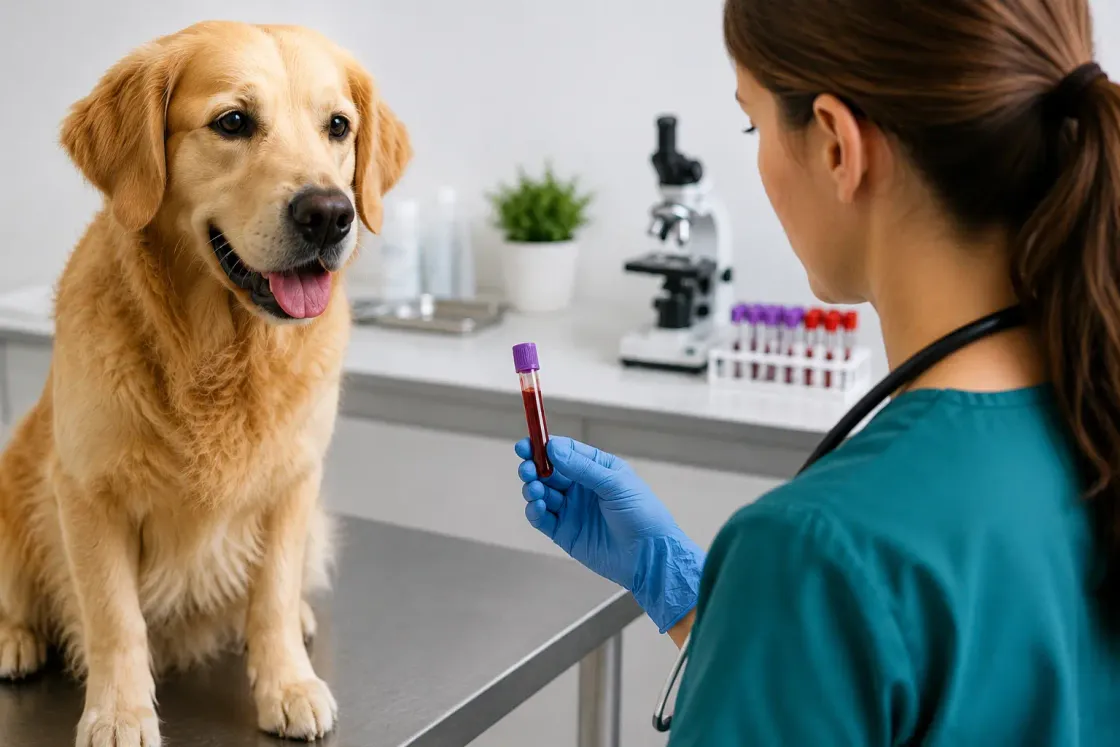
Blood tests in dogs are not one single test that explains everything. They usually combine a complete blood count (CBC) and a biochemistry panel to give clues about blood cells, hydration, kidneys, liver, glucose, proteins, electrolytes and inflammation. They may be useful when signs are vague, before anesthesia, during senior checkups or for monitoring chronic disease.
The value is in the whole picture: results, physical exam, age, medication, hydration, diet, recent signs and sometimes other tests such as urinalysis, imaging or hormone testing.
Important: this article is educational and does not replace veterinary diagnosis or treatment. If signs are severe, appear suddenly or your dog worsens quickly, contact a veterinary clinic.
Editorial note: Written by the Dogtorcito team using veterinary references from the Merck/MSD Veterinary Manual on medical tests, clinical hematology and clinical biochemistry, and AAHA on preventive monitoring in senior dogs and cats. Last reviewed: May 20, 2026.
Quick summary
| Situation | What it may add | Next step |
|---|---|---|
| Tiredness, fever, pale gums or suspected infection | The CBC may help assess anemia, white blood cells and platelets. | Interpret with the exam and signs. |
| More thirst, more urination, vomiting or weight loss | Biochemistry and glucose help assess kidneys, liver, metabolism and electrolytes. | Often combined with urinalysis. |
| Senior dog, surgery or long-term medication | Creates a baseline and helps compare trends. | Keep previous reports. |
When a blood test may be recommended
Your veterinarian may recommend blood work when the physical exam alone does not provide enough information. Common situations include:
- General signs: lethargy, fever, low appetite, weight loss, vomiting, diarrhea or pain.
- Changes in thirst or urination, suspected diabetes or kidney disease.
- Jaundice, swollen abdomen, exercise intolerance or suspected liver changes.
- Before anesthesia, surgery or certain treatments.
- Monitoring chronic disease or long-term medication.
- Senior dog checkups, even when the dog seems well.
For more context, see veterinary tests and senior dog care.
What a blood test measures
Not every panel includes the same items. A basic workup often combines CBC and biochemistry, but the clinic may adapt the panel to your dog’s age, signs and clinical suspicion.
CBC: red cells, white cells and platelets
The CBC looks at blood cells:
- Red blood cells: help detect anemia, dehydration or changes in oxygen-carrying capacity.
- White blood cells: may point toward inflammation, infection, stress, immune responses or other processes.
- Platelets: take part in clotting; low counts or changes need careful interpretation.
- Blood smear: in some cases, the clinic checks blood under a microscope to assess cell shape, platelets or blood parasites.
Biochemistry: kidney, liver, glucose, proteins and electrolytes
Biochemistry analyzes substances in plasma or serum. Depending on the panel, it may include:
- Kidneys: urea/BUN, creatinine and, in some panels, SDMA.
- Liver and bile ducts: ALT, AST, ALP, GGT and bilirubin, among others.
- Glucose: useful with suspected diabetes, low blood sugar or metabolic monitoring.
- Proteins: total protein, albumin and globulins.
- Electrolytes and minerals: sodium, potassium, chloride, calcium or phosphorus, depending on the case.
These values do not say by themselves “what disease the dog has”. They guide priorities and help decide whether urine, imaging, hormone testing, culture, infectious disease testing or other checks are needed.
Additional tests depending on suspicion
Depending on the case, your veterinarian may add:
- SDMA: a marker that may help assess kidney function together with creatinine, urea and urine.
- T4: useful if the veterinarian suspects a thyroid disorder or wants to complete certain endocrine checks.
- Cortisol or dynamic tests: when Cushing’s disease, Addison’s disease or other hormone problems are suspected.
- Coagulation tests: before some procedures or when bleeding, bruising or toxin exposure is suspected.
- Inflammation markers, infectious disease or pancreatic tests: only when they fit the history.
When to worry and call the vet
Contact a clinic, and consider emergency care if signs are severe or progressing quickly, with:
- Very pale, yellow or bluish gums.
- Marked weakness, collapse, fainting or difficulty breathing.
- Persistent vomiting, bloody diarrhea or obvious pain.
- Bleeding, extensive bruising or tiny red spots on skin or gums.
- Seizures, severe disorientation or sudden deterioration.
- Greatly increased thirst and urination, especially with weight loss, vomiting or lethargy.
What some results may mean
A results table does not turn blood work into a diagnosis. The same finding can have different causes depending on hydration, age, breed, stress, medication, signs and sample handling.
| Finding | What it may suggest | Why it should not be read alone |
|---|---|---|
| Anemia | Blood loss, inflammation, chronic disease, red cell destruction or other processes. | Needs reticulocytes, smear review, history and investigation of the cause. |
| High or low white blood cells | Inflammation, infection, stress, immune response or bone marrow problems. | The cell pattern and signs matter more than one isolated number. |
| Low platelets | Consumption, destruction, marrow changes, infectious disease or sample artifact. | It should be confirmed; platelet clumps can falsely lower the count. |
| High creatinine or urea | Dehydration, kidney disease, urinary changes or other factors. | Read with urine, SDMA, hydration, blood pressure and trend. |
| High ALT, AST, ALP or bilirubin | Liver, bile duct, muscle, endocrine, medication-related or other processes. | It does not always mean “liver failure”; imaging or other tests may be needed. |
| High or low glucose | Diabetes, stress, recent food, medication or metabolic changes. | Glucose shifts with context and may need urine or fructosamine. |
| Altered proteins | Dehydration, inflammation, kidney or intestinal loss, liver issues or other processes. | Albumin, globulins and urine help locate the problem. |
| Altered electrolytes | Vomiting, diarrhea, dehydration, kidney disease, Addison’s disease or other imbalances. | They can change quickly and must be read with signs, hydration and other values. |
How to prepare your dog
Ask your clinic what is needed for that specific test. As a practical guide:
- Confirm whether fasting is needed and for how many hours.
- Do not stop medication, supplements or special diets unless your veterinarian tells you to.
- Tell the clinic about current medication, parasite preventives, supplements and diet changes.
- Bring previous reports, especially with kidney, liver or endocrine disease or long-term medication.
- Note recent signs: appetite, thirst, urination, vomiting, diarrhea, energy, weight and behavior changes.
- Ask when results will be ready, which values they want to monitor and what changes would mean a recheck.
What to record at home
- Date of the blood test and reason for the visit.
- Signs, duration and whether they are improving or worsening.
- Weight, appetite, thirst, urination, energy and medication.
- Previous results for trend comparison.
- Questions for the clinic and recommended follow-up.
Trends are often more useful than one isolated value. Creatinine, glucose or a liver enzyme can make more sense when compared with earlier results and what you see at home.
How Dogtorcito helps
Dogtorcito works as your pet health notebook: store blood test reports, record signs, weight, medication, appetite, thirst, energy and checkups, and bring an organized history to emergency care or another clinic when needed.
Keep blood tests, signs, weight, medication and reminders in one health history so you arrive better prepared for every visit.
FAQ
Does a normal blood test rule out every disease?
No. Normal blood work reduces some concerns and gives useful reassurance, but it does not rule out every problem. Some diseases need urine, blood pressure, X-rays, ultrasound, hormone tests, culture or other diagnostics.
Does my dog need to fast?
It depends on the panel and the case. Ask your clinic. Do not change fasting, medication or a special diet without veterinary instructions, especially if your dog is a puppy, diabetic, chronically ill or on medication.
Why repeat blood work if it was done recently?
Values change with hydration, disease progression, medication and treatment. Repeating the test helps show whether a change is improving, worsening or staying stable.
Does an abnormal result mean my dog is seriously ill?
Not necessarily. Some changes are mild, temporary or related to stress, recent food, dehydration or medication. The key is for the veterinarian to read the full result with the dog in front of them.