




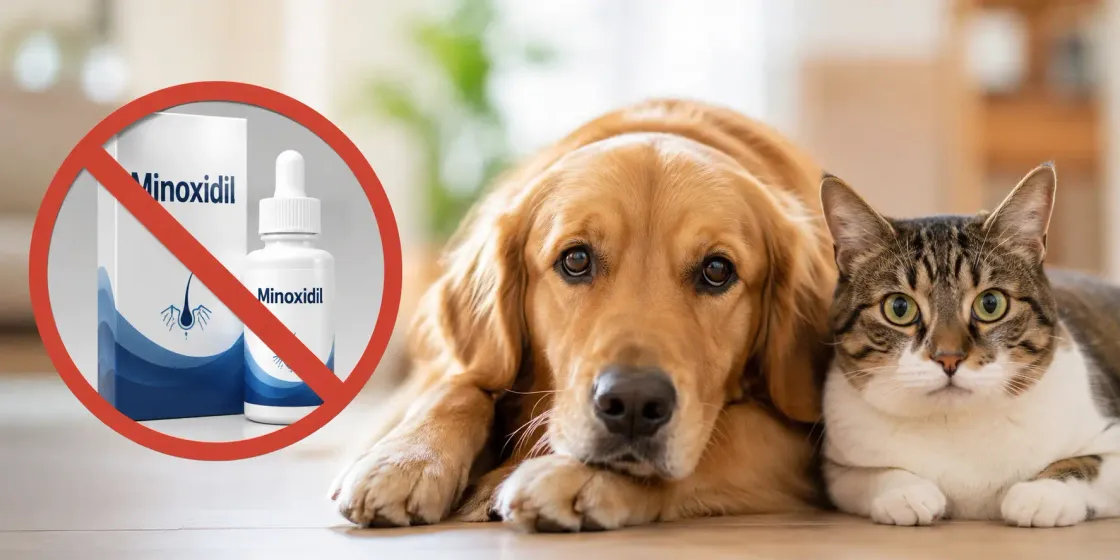
Minoxidil is a common hair-loss treatment used by many people every day. It is often sold as Rogaine® or as generic minoxidil and applied to the scalp as a foam, liquid or spray. For humans, it may feel like a normal bathroom product. For dogs and cats, especially cats, it can be a serious poisoning risk.
The worrying part is that pets do not need to drink from the bottle to be exposed. A cat may lick a pillow with residue. A dog may lick treated skin. A pet may walk through a small spill, groom its paws later and swallow the product without anyone noticing.
Veterinary toxicology reports have linked minoxidil exposure with serious heart and lung problems in pets, including low blood pressure, abnormal heart rhythm and fluid accumulation in the lungs. Cats appear to be particularly sensitive, and even small exposures can become an emergency.
Important: This guide is educational and does not replace veterinary advice. If your dog or cat may have touched, licked or swallowed minoxidil, contact your veterinarian, an emergency clinic or an animal poison control service immediately.
What is minoxidil?
Minoxidil is a medication used in people to help stimulate hair growth and slow some types of hair loss. It is commonly found in topical products applied directly to the scalp.
You may see it listed as:
- Minoxidil.
- 2% minoxidil.
- 5% minoxidil.
- Hair regrowth treatment.
- Hair-loss foam.
- Hair-loss solution.
- Scalp treatment.
- Brands such as Rogaine® or generic alternatives.
It may come as:
- Foam.
- Liquid solution.
- Spray.
- Drops.
- Compounded topical products.
- Oral tablets, when prescribed by a doctor.
This article focuses mainly on topical minoxidil, because that is the form most likely to leave residue on skin, hair, bedding, towels and household surfaces.
If you are searching because the product at home is Rogaine, see the focused guide: Is Rogaine toxic to cats and dogs?.
Is minoxidil toxic to cats and dogs?
Yes. Minoxidil can be toxic to both cats and dogs.
Cats are considered especially vulnerable. They groom frequently, have a small body size and may ingest residue from their fur, paws or bedding. Dogs can also be affected, especially if they chew a bottle, lick treated skin or ingest a larger amount.
The risk is not limited to dramatic accidents. Many exposures are quiet and ordinary:
- A cat sleeps on a pillow after minoxidil was applied at night.
- A dog licks a person’s forehead, scalp or hands.
- A bottle drips onto the bathroom floor.
- A pet chews a used tissue, glove or applicator.
- A cat brushes against treated hair and later grooms itself.
A useful rule is simple: if minoxidil can reach your pet’s mouth, paws, fur or bedding, it can become a risk.
Why is minoxidil dangerous for pets?
Minoxidil affects blood vessels and the cardiovascular system. In pets, exposure can lead to serious problems involving:
- Blood pressure.
- Heart rate.
- Heart rhythm.
- Breathing.
- Fluid balance in the lungs.
- Fluid around the chest or heart in severe cases.
Veterinary references describe possible signs such as vomiting, lethargy, weakness, fast heart rate, low blood pressure, abnormal heart rhythm, respiratory distress and pulmonary oedema.
In plain English: minoxidil can interfere with the heart and lungs in ways that can become life-threatening.
Why cats are at higher risk
Cats are not small dogs. Their grooming habits make household toxins especially dangerous.
A cat may be exposed by:
- Licking a person’s treated scalp.
- Licking treated hands or fingers.
- Sleeping on a pillow with residue.
- Walking through a spill and later licking its paws.
- Grooming minoxidil from its own fur.
- Grooming another pet that has touched the product.
- Chewing a used applicator or tissue.
- Rubbing against treated hair or skin.
Cats also tend to hide when they feel unwell, so early signs may be easy to miss. By the time breathing changes are obvious, the situation may already be urgent.
Can dogs get minoxidil poisoning too?
Yes. Dogs can also become seriously ill after minoxidil exposure.
Dogs may be exposed by:
- Licking treated skin.
- Chewing the bottle.
- Eating discarded packaging.
- Licking a spill.
- Licking the owner’s hands after application.
- Getting product on their coat and grooming it off.
Small dogs, puppies, senior dogs and dogs with heart disease may be at greater risk from smaller amounts.
Even if cats are the biggest concern, minoxidil should be treated as unsafe around all pets.
How minoxidil exposure happens at home
Many pet poisonings happen during normal routines. Nobody means to expose the animal; the product is simply present in the wrong place at the wrong time.
| Everyday situation | Why it can be risky |
|---|---|
| Applying minoxidil before bed | Residue can transfer to pillows and bedding |
| Letting a cat sleep near your head | The cat may contact treated hair or pillow residue |
| Pet licking your scalp or face | Direct ingestion of the medication |
| Pet licking your hands | Product may remain after application |
| Bottle left on a bathroom counter | Dogs or cats may knock it over or chew it |
| Used tissues in an open bin | Pets may chew contaminated waste |
| Product spills on the floor | Paws become contaminated and later groomed |
| Pet rubs against treated hair | Residue transfers to fur |
| Multiple pets grooming each other | One contaminated pet can expose another |
The danger is not just the bottle. It is the residue.
Symptoms of minoxidil poisoning in cats
Signs may appear quickly, but they can also be delayed. Do not wait for symptoms if exposure is suspected.
Possible signs in cats include:
- Lethargy.
- Weakness.
- Vomiting.
- Reduced appetite.
- Hiding.
- Unusual stillness.
- Fast breathing.
- Laboured breathing.
- Open-mouth breathing.
- Fast heart rate.
- Low body temperature.
- Pale, grey or bluish gums.
- Collapse.
- Fluid in or around the lungs, diagnosed by a veterinarian.
Cat breathing warning
Open-mouth breathing in a cat is an emergency. A cat that is breathing with effort, stretching its neck, crouching low, hiding while breathing fast or using its belly to breathe needs urgent veterinary care.
Timeline: how quickly signs can appear
The timeline for minoxidil poisoning in cats is not predictable. Some pets show warning signs within hours, while others may seem normal at first and worsen later as cardiovascular or breathing problems develop.
Because the early timeline can be unclear, the safest response is to call a veterinarian or animal poison control service as soon as exposure is suspected. Do not wait to see whether vomiting, weakness, fast breathing or collapse appears.
Symptoms of minoxidil poisoning in dogs
Possible signs in dogs include:
- Vomiting.
- Lethargy.
- Weakness.
- Restlessness.
- Panting.
- Fast heart rate.
- Abnormal heart rhythm.
- Low blood pressure.
- Coughing.
- Difficulty breathing.
- Collapse.
Some dogs may seem only mildly unwell at first. That does not mean the exposure is safe.
The same caution applies to dogs: minoxidil toxicity can start subtly and then progress. A dog that licked Rogaine, chewed a minoxidil bottle or walked through a spill should be treated as a potential poisoning case, even before obvious symptoms appear.
What to do if your pet touched, licked or swallowed minoxidil
If your dog or cat may have been exposed to minoxidil, act quickly.
- Move the product away from your pet.
- Stop your pet from licking or grooming.
- Call your veterinarian, emergency clinic or animal poison control service immediately.
- Do not wait for symptoms.
- Do not induce vomiting unless a veterinarian tells you to.
- Do not give home remedies.
- Keep the packaging so the veterinary team can check the concentration.
If minoxidil is on your pet’s fur or paws, the vet may advise bathing or decontamination. Ask first, especially if your pet is weak, cold, stressed or breathing abnormally.
Information your vet will need
When you call, try to provide:
- Your pet’s species: dog or cat.
- Breed, age and weight.
- Product name.
- Minoxidil concentration, such as 2% or 5%.
- Form: foam, liquid, spray, drops or tablet.
- Estimated amount involved.
- Time of exposure.
- How exposure happened.
- Current symptoms.
- Any known heart, kidney or respiratory disease.
- Any medications your pet already takes.
Do not worry if you do not know every detail. Call anyway. Partial information is better than waiting.
How vets may treat minoxidil poisoning
Treatment depends on the species, amount, timing and clinical signs.
Veterinary care may include:
- Decontamination when appropriate.
- Activated charcoal in selected cases.
- Monitoring heart rate.
- Monitoring blood pressure.
- ECG monitoring for rhythm problems.
- Oxygen support.
- Medication for fluid in the lungs.
- Medication to support blood pressure or heart function.
- Intravenous fluids when appropriate.
- Hospitalisation for observation and repeated checks.
There is no safe “wait and see” approach after a meaningful exposure, especially in cats.
How to prevent minoxidil poisoning in pets
The best treatment is prevention. If someone in your home uses minoxidil, create a strict safety routine.
Safer application habits
- Apply minoxidil in a closed room away from pets.
- Wash your hands thoroughly after every use.
- Let the product dry fully before touching pets.
- Do not let pets lick your scalp, forehead, beard, face or hands.
- Avoid applying minoxidil right before sleeping with pets nearby.
- Cover treated areas when practical.
- Keep cats away from treated hair and pillows.
- Do not apply minoxidil while sitting on a sofa or bed where pets rest.
Safer storage
- Store minoxidil in a closed cabinet.
- Do not leave bottles on bedside tables.
- Do not leave bottles on bathroom counters.
- Keep products inside a drawer or cupboard pets cannot open.
- Close caps tightly after every use.
- Keep travel bottles and toiletry bags away from pets.
Safer cleaning and laundry
- Clean spills immediately.
- Keep pets out of the room until surfaces are fully cleaned and dry.
- Wash pillowcases regularly.
- Wash hats, towels and bedding that may contact treated hair.
- Dispose of tissues, gloves and applicators in a secure bin.
- Use a bin with a lid, especially if you have dogs.
Extra caution with cats
If you have a cat that sleeps near your head, licks your hair, grooms you, climbs onto bathroom counters or sleeps on laundry, topical minoxidil may be difficult to manage safely.
Speak with your doctor about your treatment options and with your veterinarian about the risk in your household. Do not stop a prescribed medication without medical advice, but do take the risk seriously.
Is dry minoxidil still dangerous to pets?
Dry residue may still be a problem.
Once the product dries, it may not look wet or obvious, but residue can remain on hair, skin, pillows or fabric. A pet may contact the residue and ingest it later through grooming.
This is especially important for cats because grooming is constant and thorough.
Is oral minoxidil safer for pets?
Oral minoxidil may reduce the risk of topical residue on hair, skin and bedding, but it is still a medication that must be stored securely. A pet that chews or swallows tablets may be at risk.
Never change from topical to oral minoxidil without speaking to your doctor. Oral minoxidil is prescription-only in many places and can have important side effects in people.
From a pet safety perspective, any minoxidil product should be treated as a hazardous medication around animals.
Common myths about minoxidil and pets
“My pet would never drink it”
Many exposures do not involve drinking from the bottle. Licking skin, pillows, paws or fur can be enough to create concern.
“It is safe once it dries”
Dry residue may still transfer to fur or bedding and later be swallowed during grooming.
“Only cats are affected”
Cats are especially sensitive, but dogs can also develop serious poisoning.
“A tiny amount cannot matter”
With cats, small exposures can be dangerous. Small dogs may also be at higher risk.
“I can monitor at home”
Minoxidil can affect the heart and lungs. Early veterinary advice is much safer than waiting for severe signs.
“If my pet seems normal, everything is fine”
Clinical signs may be delayed. A pet can look normal at first and worsen later.
When to seek emergency care
Seek urgent veterinary help if your pet has possible minoxidil exposure and shows any of the following:
- Difficulty breathing.
- Fast breathing.
- Open-mouth breathing in a cat.
- Collapse.
- Severe weakness.
- Pale, grey or blue gums.
- Repeated vomiting.
- Extreme lethargy.
- Fast or irregular heartbeat.
- Sudden hiding or abnormal behaviour.
- Coughing after exposure.
- Inability to stand normally.
If you are unsure whether exposure happened, call a vet or poison control service. With minoxidil, it is better to overreact early than underreact late.
Quick safety checklist for pet owners using minoxidil
Use this checklist at home:
- I apply minoxidil away from pets.
- I wash my hands after every application.
- I do not let pets lick treated skin or hair.
- I keep cats away from pillows with possible residue.
- I store minoxidil in a closed cabinet.
- I dispose of tissues and applicators in a secure bin.
- I clean spills immediately.
- I know my nearest emergency vet clinic.
- I have poison control contact information saved.
- I have my pet’s weight and medication list available.
How Dogtorcito helps with pet safety
Pet emergencies are stressful. The best time to prepare is before anything happens.
Dogtorcito helps you keep important information organised and ready for your veterinarian.
🚨 Emergency contacts
Save your regular vet, emergency hospital and animal poison control contact details so you do not have to search during a crisis.
🧴 Household toxin notes
Create a list of products in your home that may be risky for pets, including minoxidil, human medications, topical creams, cleaning products and insecticides.
📋 Medical history in one place
Keep your pet’s weight, age, diagnoses, medications, allergies, lab results and previous conditions organised for quick sharing.
📝 Exposure timeline
If an accident happens, record the product, time, amount, symptoms and actions taken. This helps your veterinary team make faster decisions.
🔔 Safety reminders
Set reminders to store products safely, wash bedding, check bins, close bathroom doors or update emergency contacts.
The takeaway: minoxidil and pets do not mix
Minoxidil may be a common hair-loss treatment for people, but it can be dangerous for dogs and especially cats.
The biggest risk is not always a pet drinking from the bottle. It may be a lick, a pillow, a spill, a contaminated paw or a bit of residue on fur.
If your pet may have been exposed, do not wait for symptoms. Call your veterinarian or an emergency clinic immediately.
A simple rule can prevent a serious emergency: no contact, no licking, no residue.
Dogtorcito helps you stay prepared, organised and ready to protect your pet when every detail matters. 🐾
Keep your pet’s emergency information ready
Store medical history, medications, vet contacts, symptoms and household toxin notes — all in one place, always ready when you need it.
FAQ
Is minoxidil toxic to cats?
Yes. Cats are especially sensitive to minoxidil. Exposure can happen by licking treated skin, grooming contaminated fur, walking through spills or sleeping on bedding with residue.
Is minoxidil toxic to dogs?
Yes. Dogs can also develop minoxidil poisoning, especially after licking treated skin, chewing bottles or ingesting contaminated waste.
What should I do if my cat licked minoxidil?
Call your veterinarian, emergency clinic or animal poison control service immediately. Do not wait for symptoms and do not try home treatment unless instructed by a vet.
Is Rogaine toxic to cats and dogs?
Yes. Rogaine is a brand name for minoxidil. The same safety concerns apply to Rogaine foam, liquid minoxidil and generic hair-growth products that contain minoxidil.
What is the timeline for signs of minoxidil poisoning in cats?
There is no safe timeline to wait out at home. Signs can appear within hours or be delayed, and breathing or heart problems may become serious quickly. Call a veterinarian or animal poison control service as soon as exposure is suspected.
Can minoxidil on a pillow hurt a cat?
Yes, it can be risky. Residue may transfer from a pillow to a cat’s fur and then be swallowed during grooming.
Is dried minoxidil safe around pets?
Dry residue may still be a concern because it can remain on hair, skin, bedding or fabric and later be ingested by grooming.
How long should pets stay away after applying minoxidil?
There is no universally safe time that guarantees zero risk, especially for cats. Keep pets away from treated areas, prevent licking, wash hands, avoid contaminated bedding and speak with your veterinarian about your household’s risk.
Can I use minoxidil if I have cats?
Some people do, but it requires strict precautions. If your cat sleeps near your head, licks you, accesses your bathroom or grooms your hair, discuss safer options with your doctor and your veterinarian.
References
-
Tater KC, Gwaltney-Brant S, Wismer T. Topical Minoxidil Exposures and Toxicoses in Dogs and Cats. Journal of the American Animal Hospital Association. 2021.
https://pubmed.ncbi.nlm.nih.gov/34370845/ -
McMullen E, Chen E, Fettel J, Nguyen J, Nambudiri VE. Minoxidil toxicosis in cats and dogs: A scoping review and call to action. Journal of the American Academy of Dermatology. 2025.
https://pubmed.ncbi.nlm.nih.gov/40189148/ -
Merck Veterinary Manual. Toxicosis in Animals From Human Topical Agents.
https://www.merckvetmanual.com/toxicology/toxicosis-from-human-topical-agents/toxicosis-in-animals-from-human-topical-agents -
ASPCA. Minoxidil and Pets: What You Need to Know.
https://www.aspca.org/news/minoxidil-and-pets-what-you-need-know -
ASPCApro. Topical Creams and Pets: A Dangerous Combination.
https://www.aspcapro.org/resource/topical-creams-and-pets-dangerous-combination -
MedlinePlus. Minoxidil Topical: Drug Information. U.S. National Library of Medicine.
https://medlineplus.gov/druginfo/meds/a689003.html -
MSD Veterinary Manual. Principles of Toxicosis Treatment in Animals.
https://www.msdvetmanual.com/toxicology/toxicology-introduction/principles-of-toxicosis-treatment-in-animals