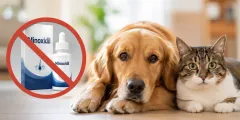





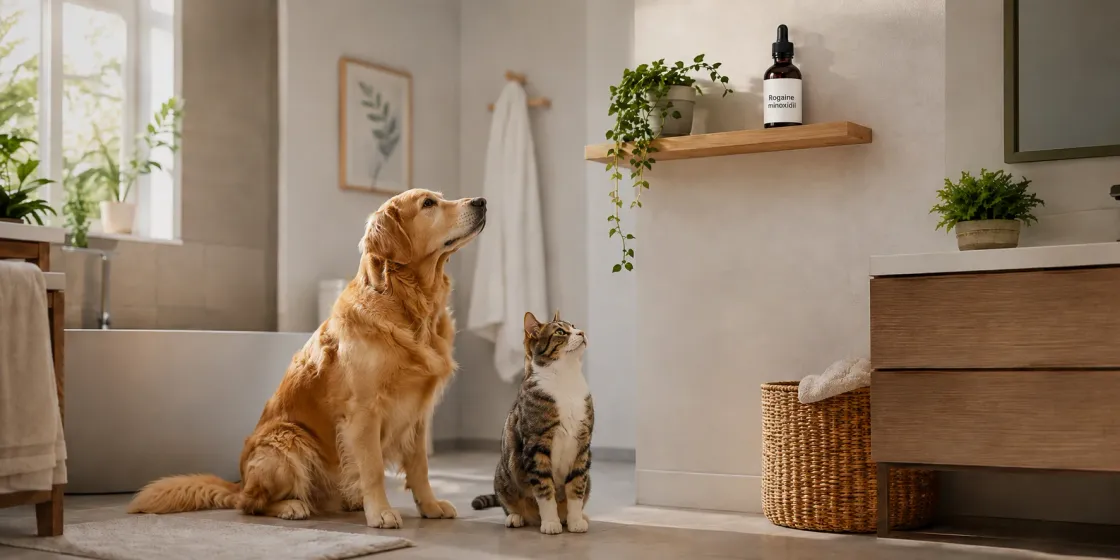
Yes. Rogaine can be toxic to cats and dogs because Rogaine is a brand name for products that contain minoxidil.
The risk is especially serious for cats, but dogs can also become ill after licking treated skin, chewing a bottle, walking through a spill or ingesting contaminated waste. If your pet may have touched, licked or swallowed Rogaine, treat it as a potential poisoning case.
Important: This article is educational and does not replace veterinary advice. If exposure may have happened, call your veterinarian, an emergency clinic or an animal poison control service immediately.
What is Rogaine?
Rogaine is a hair-growth product used by people for hair loss. Its active ingredient is minoxidil. You may see it as foam, liquid solution or a generic minoxidil product with similar ingredients.
For people, it is usually applied to the scalp. For pets, the problem is accidental exposure:
- A cat licks a pillow with residue.
- A dog licks treated skin or hands.
- A bottle spills on the bathroom floor.
- A pet chews packaging, tissues or an applicator.
- A cat rubs against treated hair and later grooms itself.
For a broader explanation of minoxidil products, symptoms and prevention, read the complete guide: Minoxidil toxicosis in cats and dogs.
What to do now
If your cat or dog was exposed to Rogaine:
- Move the product away from your pet.
- Stop licking or grooming if you can do so safely.
- Call your veterinarian, emergency clinic or animal poison control service.
- Keep the bottle or packaging so the concentration can be checked.
- Do not induce vomiting unless a veterinarian tells you to.
- Do not wait for symptoms before calling.
If Rogaine is on the fur or paws, ask the vet whether bathing or decontamination is appropriate. A weak, cold, stressed or breathless pet may need urgent professional care before anything else.
Why cats are at higher risk
Cats groom constantly and can swallow residue from fur, paws, bedding or human skin. They may also hide early signs of illness, so owners may not notice a problem until breathing or heart-related signs are more obvious.
Even a small exposure can be concerning in cats. Do not assume that dried residue is safe.
Can Rogaine poison dogs too?
Yes. Dogs are not the main species discussed in many minoxidil warnings, but they can still develop poisoning. Risk increases if the dog chews a bottle, licks a fresh application, ingests a larger amount or is small, young, senior or has heart disease.
Warning signs in cats and dogs
Possible signs include:
- Vomiting.
- Weakness or lethargy.
- Fast breathing.
- Difficulty breathing.
- Open-mouth breathing in cats.
- Fast or irregular heartbeat.
- Pale, grey or blue gums.
- Coughing.
- Collapse.
- Sudden hiding or unusual behaviour.
The timeline is not reliable. Some pets may show signs within hours, while others may appear normal at first and worsen later.
How to prevent exposure
- Apply Rogaine away from pets.
- Wash hands after application.
- Do not let pets lick treated skin, hair or pillows.
- Keep cats away from bedding that may contain residue.
- Store bottles in a closed cabinet.
- Clean spills immediately.
- Put tissues, gloves and applicators in a secure bin.
FAQ
Is Rogaine the same as minoxidil?
Rogaine is a brand name. Minoxidil is the active ingredient. Generic minoxidil products can carry the same pet-safety concern.
Is dried Rogaine safe for cats?
Dried residue may still transfer to fur or bedding and be swallowed during grooming. Do not treat dried residue as risk-free, especially around cats.
Should I wait to see if symptoms appear?
No. Call a veterinarian or poison control service as soon as exposure is suspected. Early advice is safer than waiting.
Complete guide
This article answers the Rogaine-specific question. For more detail on minoxidil toxicity, exposure routes, treatment, prevention and references, read the full guide: Minoxidil toxicosis in cats and dogs.