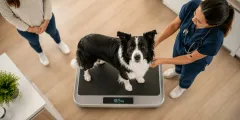





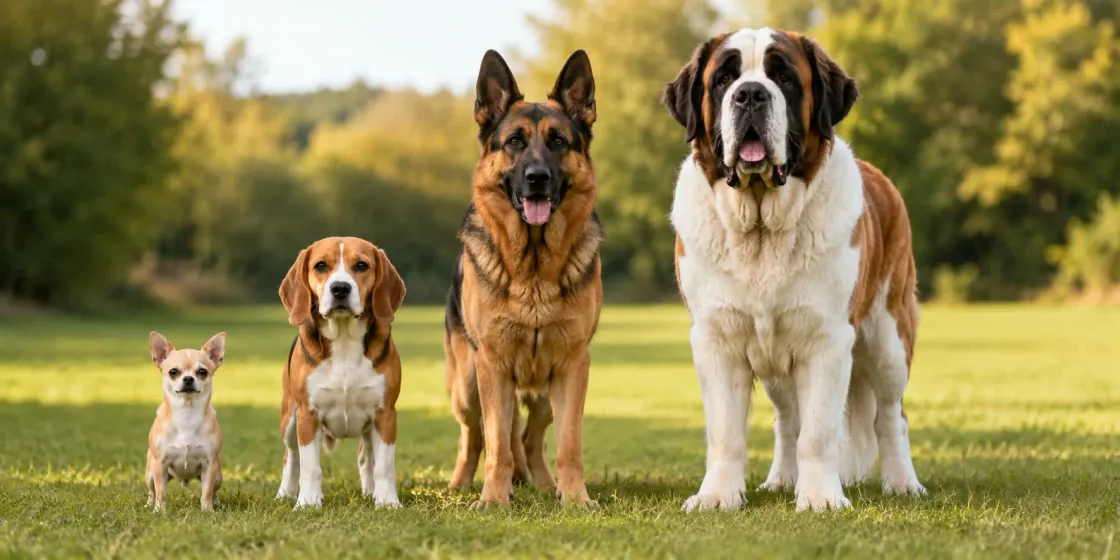
Your dog’s ideal weight depends on breed, size, sex, age, muscle mass and body shape. A 3 kg Chihuahua and a 70 kg Saint Bernard can both be healthy when their weight matches their breed and body condition.
A breed weight table is a useful starting point, but it is never the whole answer. The other key measure is the Body Condition Score (BCS), which helps you judge whether your dog is too thin, at a healthy weight or overweight.
Once you have a reference range, the next step is consistency: weigh your dog at the right frequency and, for young dogs, start with a puppy weighing routine early enough to spot growth changes.
Important: These values are reference ranges. Your veterinarian should always adapt the target weight to your dog’s build, health status, age and activity level.
Quick answer: how do I know if my dog is at an ideal weight?
A dog is usually in good condition when:
- the ribs are easy to feel without pressing hard,
- a waist is visible from above,
- the belly tucks up slightly when viewed from the side,
- weight stays relatively stable over several weeks,
- the dog looks fit and moves normally.
If you only look at the number on the scale, you miss the most important part: body shape. That is why weight, BCS and regular observation work best together.
Why weight varies so much between breeds
Body size in dogs is strongly genetic and varies more than in any other domestic species. Some toy breeds barely exceed 3 kg as adults, while giant breeds can reach 80–90 kg. Talking about an “average dog weight” without naming the breed has little clinical value.
Within the same breed, a healthy weight can also vary by:
- Sex: males often weigh 10–20% more than females.
- Age: puppies gain weight quickly; senior dogs can lose muscle mass.
- Neutering: energy needs can drop if food and activity are not adjusted.
- Body type: working lines, show lines, mixed ancestry and muscle mass can change the number a lot.
Dog weight table by breed
| Breed | Male | Female |
|---|---|---|
| Chihuahua | 1.5–3 kg / 3–7 lb | 1.5–2.7 kg / 3–6 lb |
| Yorkshire Terrier | 2–3.5 kg / 4–8 lb | 2–3.2 kg / 4–7 lb |
| Maltese | 3–4 kg / 7–9 lb | 2.5–3.5 kg / 6–8 lb |
| Pomeranian | 1.8–3.5 kg / 4–8 lb | 1.8–3 kg / 4–7 lb |
| Miniature Schnauzer | 5–9 kg / 11–20 lb | 5–8 kg / 11–18 lb |
| French Bulldog | 9–14 kg / 20–31 lb | 8–13 kg / 18–29 lb |
| Pug | 6–8.5 kg / 13–19 lb | 6–8 kg / 13–18 lb |
| Beagle | 10–14 kg / 22–31 lb | 9–11 kg / 20–24 lb |
| Cocker Spaniel | 12–16 kg / 26–35 lb | 10–13 kg / 22–29 lb |
| Border Collie | 14–20 kg / 31–44 lb | 12–18 kg / 26–40 lb |
| Australian Shepherd | 23–29 kg / 51–64 lb | 18–25 kg / 40–55 lb |
| Siberian Husky | 20–27 kg / 44–60 lb | 16–23 kg / 35–51 lb |
| English Bulldog | 23–25 kg / 51–55 lb | 18–23 kg / 40–51 lb |
| Dalmatian | 24–32 kg / 53–71 lb | 20–29 kg / 44–64 lb |
| Labrador Retriever | 29–36 kg / 64–79 lb | 25–32 kg / 55–71 lb |
| Golden Retriever | 29–34 kg / 64–75 lb | 25–30 kg / 55–66 lb |
| German Shepherd | 30–40 kg / 66–88 lb | 22–32 kg / 49–71 lb |
| Boxer | 27–32 kg / 60–71 lb | 22–28 kg / 49–62 lb |
| Doberman Pinscher | 34–45 kg / 75–99 lb | 27–41 kg / 60–90 lb |
| Standard Poodle | 20–32 kg / 44–71 lb | 18–27 kg / 40–60 lb |
| Belgian Malinois | 25–30 kg / 55–66 lb | 20–25 kg / 44–55 lb |
| Weimaraner | 30–40 kg / 66–88 lb | 25–35 kg / 55–77 lb |
| Bernese Mountain Dog | 38–50 kg / 84–110 lb | 32–45 kg / 71–99 lb |
| Rottweiler | 50–60 kg / 110–132 lb | 35–48 kg / 77–106 lb |
| Great Dane | 54–90 kg / 119–198 lb | 45–59 kg / 99–130 lb |
| Saint Bernard | 64–82 kg / 141–181 lb | 54–70 kg / 119–154 lb |
These are broad reference ranges for common breeds. For mixed-breed dogs, very athletic dogs, neutered dogs or seniors, the BCS is often more useful than the breed table alone. If your dog is outside the range, do not change the diet based on the table alone: check body condition and ask your veterinary clinic first.
Dogtorcito’s calculator includes more breeds than this table and lets you compare an adult dog’s weight by breed, sex and unit.
Estimate weight by size
If your dog is mixed-breed or you do not know the exact breed standard, a size category can help:
| Category | Approximate adult weight |
|---|---|
| Toy / miniature | under 5 kg |
| Small | 5–10 kg |
| Medium | 10–25 kg |
| Large | 25–45 kg |
| Giant | over 45 kg |
This helps with food portions, kibble size, exercise and joint load. It does not replace an individual assessment.
Body Condition Score: better than the scale alone
The scale tells you how heavy your dog is, but not whether that weight fits their frame. The Body Condition Score (BCS) is usually assessed on a 1 to 9 scale.
| BCS | Meaning |
|---|---|
| 1–2 | Severe underweight. Ribs, spine and hips clearly visible. |
| 3 | Underweight. Ribs may be visible or very easy to feel. |
| 4–5 | Ideal weight. Ribs are palpable, waist visible, belly slightly tucked. |
| 6–7 | Overweight. Ribs are harder to feel, fat cover is noticeable. |
| 8–9 | Obesity. Ribs are difficult or impossible to feel, clear fat deposits. |
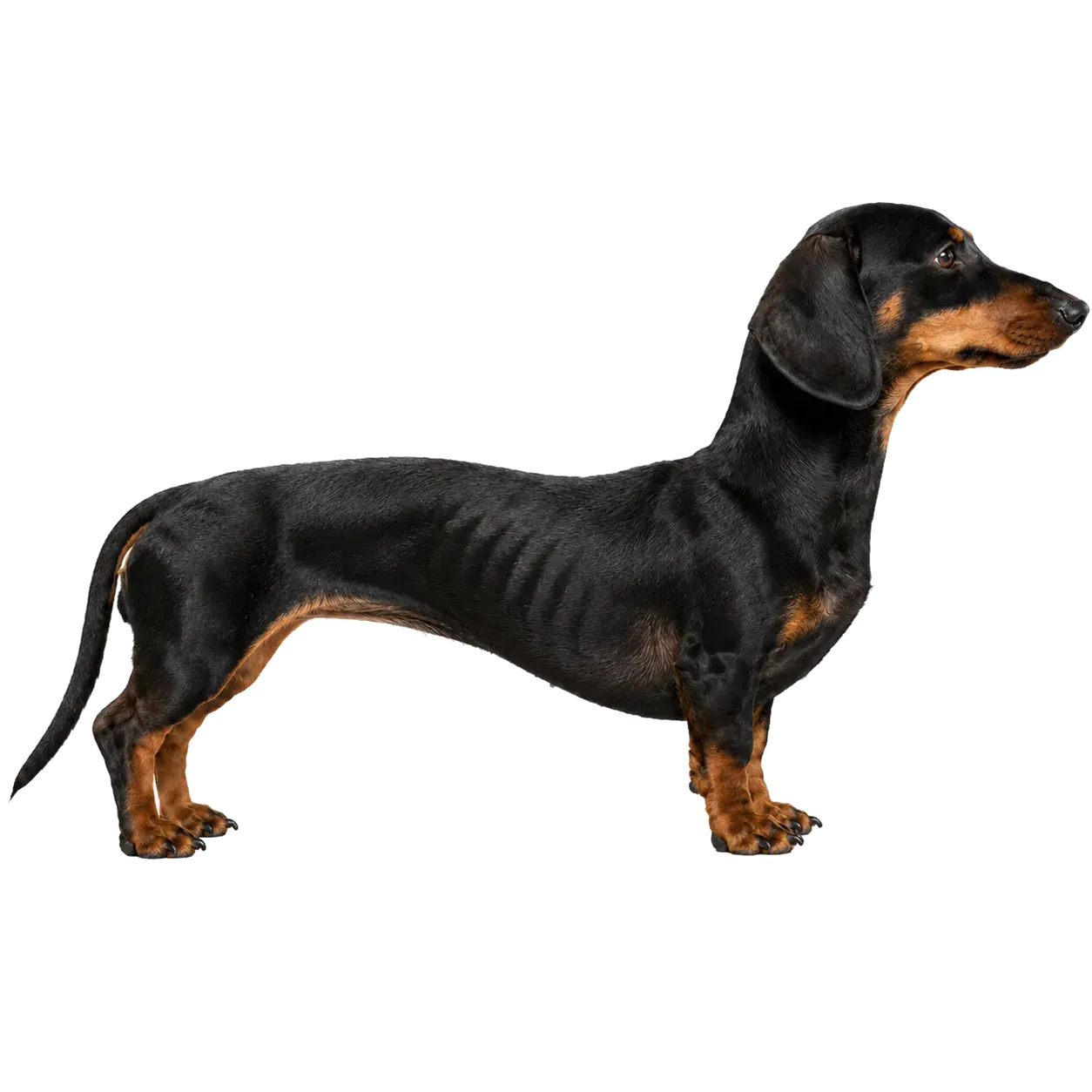 BCS 1–2: severe underweight
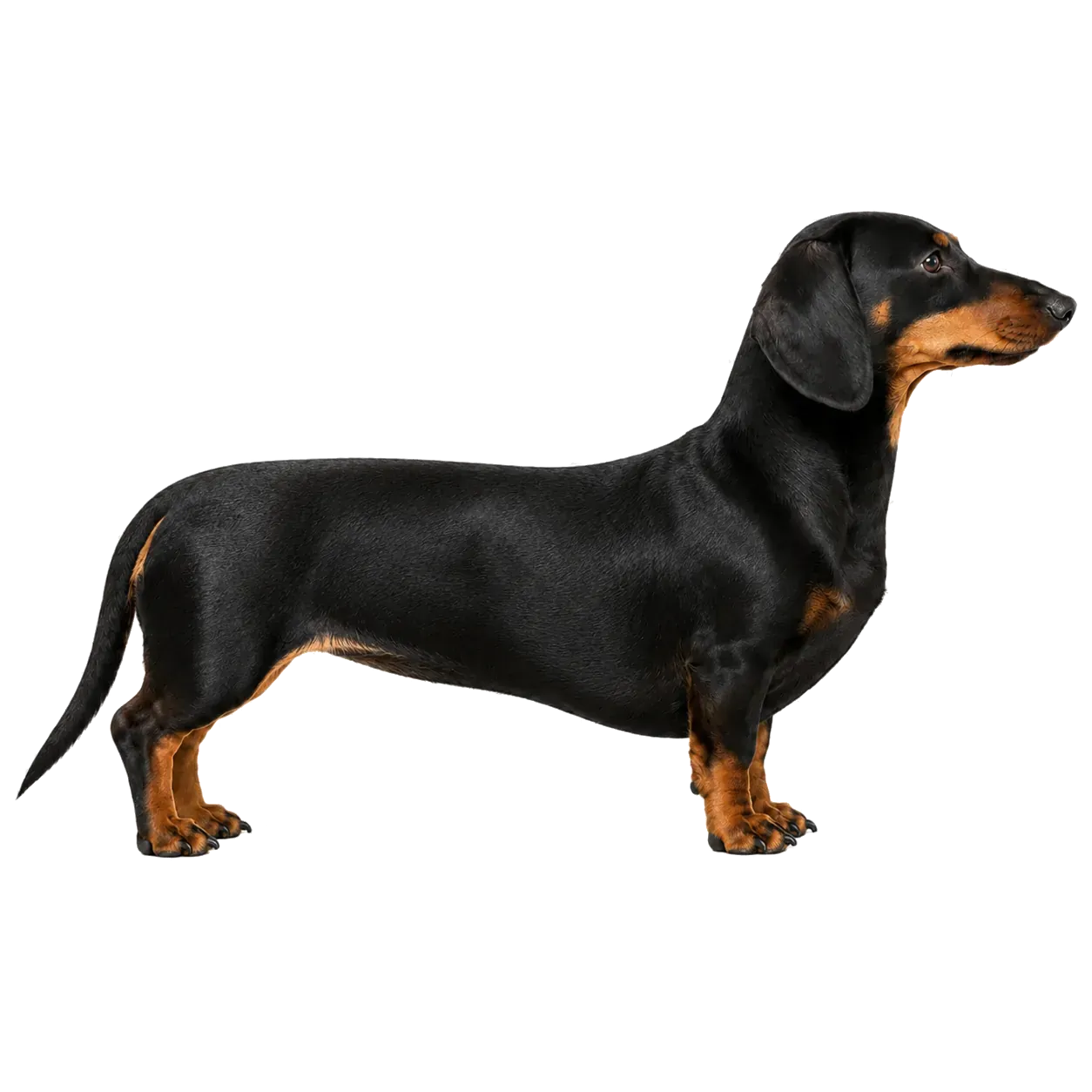 BCS 4–5: ideal body condition
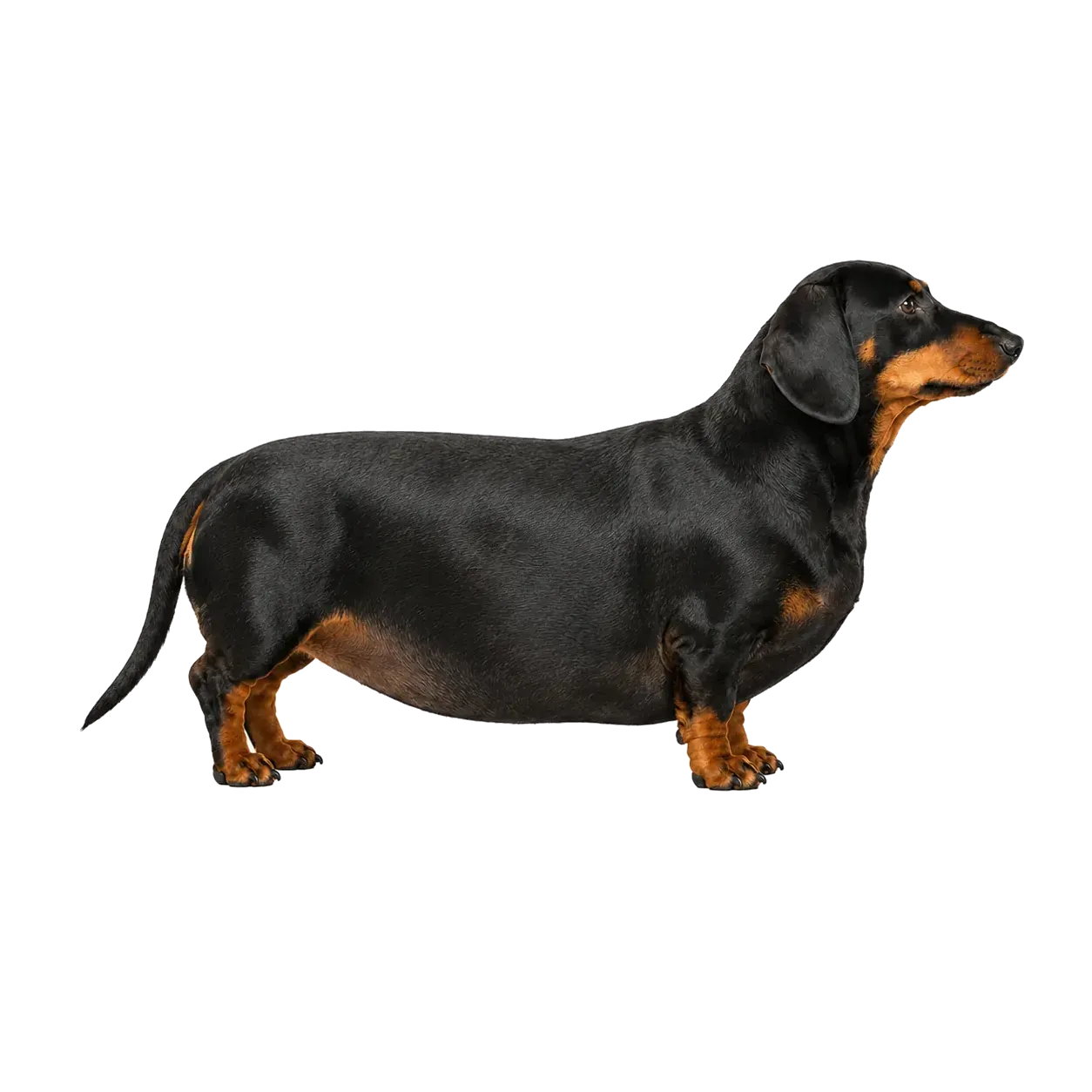 BCS 8–9: obesity
How to check BCS at home
- Ribs: run both hands along the sides of the chest. In ideal condition, you should feel the ribs without pressing hard.
- Waist: look at your dog from above. There should be a visible narrowing behind the ribs.
- Belly line: look from the side. The belly should tuck up slightly toward the groin, not hang flat or low.
With long or dense coats, touch is more reliable than sight. If you are unsure, ask your clinic to show you the BCS during an appointment.
Weight by age: puppies, adults and seniors
Puppies
Growth is not linear. Small breeds often reach adult weight at 8–12 months; giant breeds may keep growing until 18–24 months. Regular weighing during this stage helps spot delayed growth or weight gain that is too fast.
Adult dogs
Between about 2 and 7 years of age, weight should stay relatively stable. A gain or loss of more than 10% without an obvious reason is a good reason to contact your veterinarian.
Senior dogs
From around 7 years old, and often earlier in giant breeds, muscle mass can drop even when body weight looks stable. That is why BCS and muscle condition matter especially in older dogs.
When to call the vet
Book a veterinary check if you notice:
- rapid weight loss without a clear explanation,
- clear weight gain despite the same food routine,
- increased thirst, increased urination, vomiting or diarrhoea,
- loss of appetite or unusual hunger,
- limping, reluctance to move or breathing difficulty,
- visible muscle loss in a senior dog.
Diet changes should always be discussed with your clinic for puppies, seniors, dogs with chronic disease and dogs with significant obesity.
What data to save in Dogtorcito
To spot changes early, save more than the current weight:
- Weighing date.
- Weight in kg.
- BCS or a short body condition note.
- Food amount and food changes.
- Activity, walks or training.
- Signs such as limping, increased thirst or reduced appetite.
- Target weight or recommendation from your veterinary clinic.
How Dogtorcito helps
Knowing the ideal weight for your dog’s breed is the first step. The second is recording your dog’s real weight regularly.
With Dogtorcito, you can:
- record every weigh-in with date and notes,
- see weight trends over time,
- compare today’s weight with previous values,
- keep notes for the next vet visit,
- manage several dogs separately.
That way, your next appointment starts with a real trend, not just a rough memory.
Frequently asked questions
Is there an ideal weight for every dog breed?
There are useful ranges, but not one perfect number. Build, sex, age, muscle mass and BCS all matter.
Is my dog overweight if they are above the table?
Not automatically. A muscular dog can weigh more and still be in ideal condition. If the ribs are hard to feel and the waist has disappeared, overweight is more likely.
How often should I weigh my dog?
For healthy adult dogs, monthly weighing is often enough. Puppies, seniors, dogs on a weight-loss plan or dogs with medical conditions may need more frequent checks.
What matters more: weight or Body Condition Score?
Both belong together. Weight shows the trend; BCS shows whether that weight fits the dog’s body.
Sources and further reading
- AAHA - 2021 Nutrition and Weight Management Guidelines for Dogs and Cats
- AAHA - Body and Muscle Condition Score
- WSAVA - Global Nutrition Guidelines
- FCI - Breed standards and nomenclature
- VDH - Breed standards and dog health