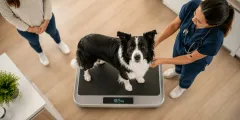




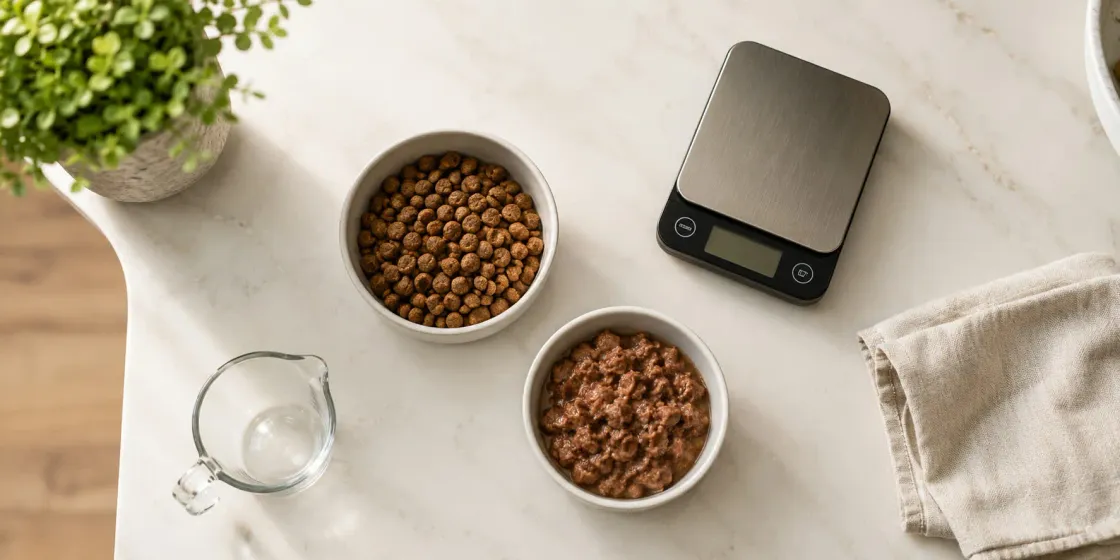
What your dog eats and their body condition are closely linked. An overweight dog may need a different nutritional strategy from one that is underweight, and both food format — dry or wet — and nutrient profile can make a real difference.
This guide explains what to look for in each case and gives you practical food examples. These are not prescriptions: the best food for your dog depends on age, breed, activity level, medical history, current weight, target weight and veterinary assessment.
Important notice: Always consult your vet before changing your dog’s diet, especially if your dog is overweight, obese, underweight, elderly, a puppy, pregnant, or has any known medical condition. This guide is informational and does not replace clinical diagnosis.
How to assess your dog’s condition
The first step is to estimate your dog’s Body Condition Score (BCS). A commonly used system rates dogs from 1 to 9:
- 1–3: Under ideal condition. Ribs, spine or pelvic bones may be visible or easy to feel, with little fat cover.
- 4–5: Ideal condition. Ribs are easy to feel without excess fat, the waist is visible from above and the abdomen is tucked when viewed from the side.
- 6–7: Over ideal condition. Ribs become harder to feel and fat deposits may be present.
- 8–9: Obese. Ribs are difficult or impossible to feel, the waist is absent and fat deposits are more evident.
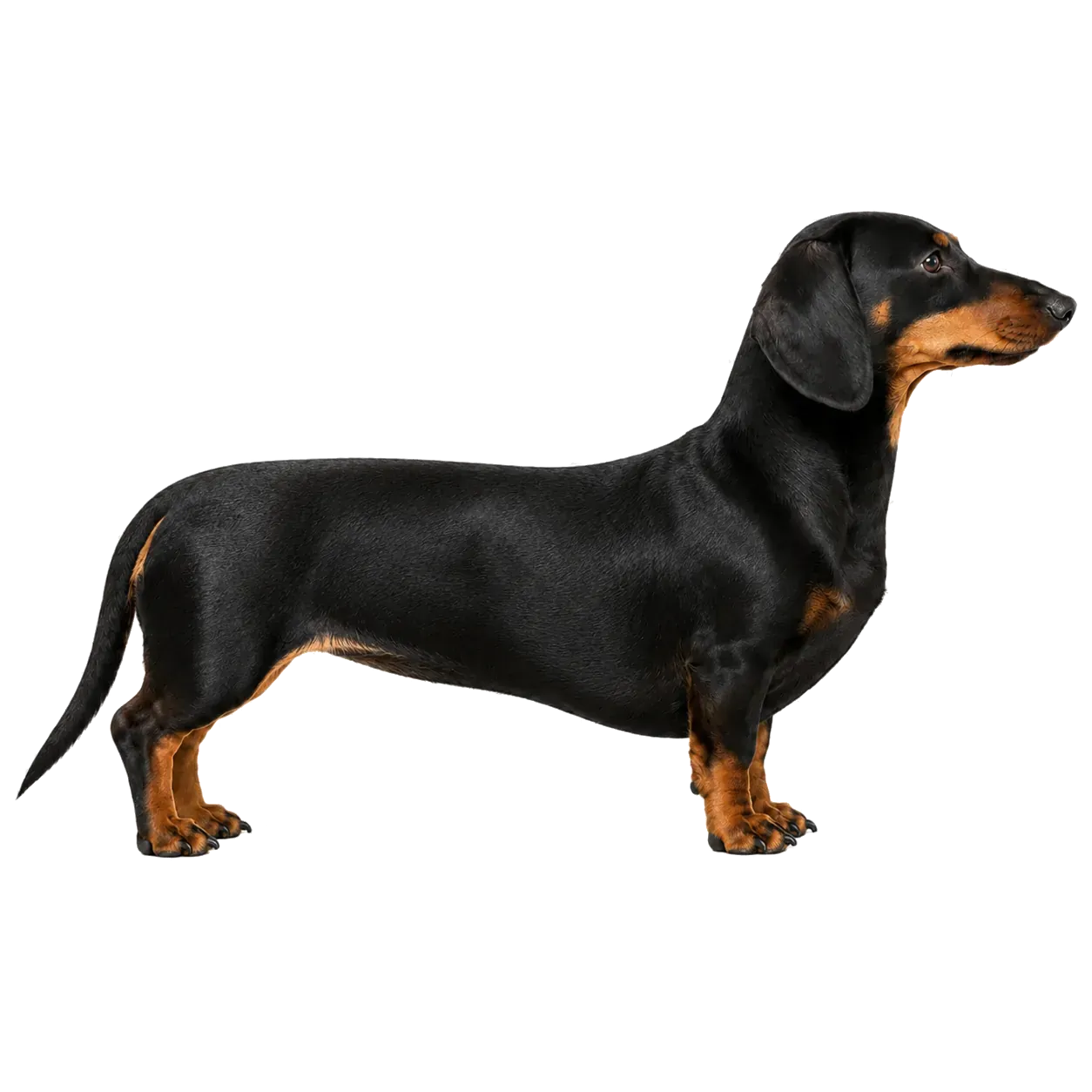 BCS 5, or ideal condition, is often used as a practical target for healthy weight management.
To learn how to assess your dog’s body condition at home, see our guide on ideal weight by breed.
A BCS estimate is useful, but it is not the whole picture. Muscle condition, activity level, age, breed and disease history also matter. If you are unsure whether your dog is at a healthy weight, ask your vet to check both body condition and muscle condition.
Overweight dogs (BCS 6–9)
What to look for in food for overweight dogs
For overweight dogs, the goal is usually to reduce body fat while preserving muscle mass. In most cases, this should be done gradually and with regular weigh-ins.
Look for:
- Reduced calorie density, with daily portions calculated according to the dog’s target weight.
- Adequate or high protein, to help preserve lean muscle during weight loss.
- Higher fibre, which may support satiety and help some dogs feel fuller between meals.
- Clear feeding guidelines, preferably with a target-weight chart.
- A reputable manufacturer, with complete nutrient information and quality control standards.
- Veterinary guidance, especially for obese dogs or dogs with medical conditions.
Avoid relying only on marketing claims such as “light”, “grain-free” or “natural”. Weight loss depends mainly on total daily calorie intake, portion control, nutrient balance and consistency.
Recommended dry foods
These are examples of foods commonly used for weight-prone dogs. For obesity or medical cases, veterinary diets should be used under professional supervision.
Eukanuba Daily Care Overweight / Sterilised
A maintenance option designed for dogs prone to weight gain. It is lower in fat than many standard adult formulas and includes L-carnitine. Available in different kibble sizes.

Royal Canin Satiety Weight Management
A veterinary weight-management diet designed to support satiety and controlled weight loss. Best used as part of a supervised plan with regular weight checks.

Advance Veterinary Diets Weight Balance
A veterinary-style weight-control formula with reduced fat, high protein and L-carnitine. Particularly relevant for dogs that need a structured calorie-controlled diet.

Recommended wet foods
Wet food can be useful during a weight-loss plan because it often provides more volume and moisture per calorie than dry food. This can help some dogs feel more satisfied, although portions still need to be measured carefully.
Hill’s Science Plan Perfect Weight — tins
A wet option designed for weight management and maintenance. Useful for dogs that prefer pâté-style textures or need extra hydration.
Purina Pro Plan Veterinary Diets OM Obesity Management — pouches
A veterinary diet designed for obesity management. Best used with frequent weigh-ins and veterinary follow-up.

Dogs at ideal weight (BCS 4–5)
What to look for in a maintenance food
For dogs at an ideal weight, the goal is not to push calories up or down, but to maintain a stable, healthy condition.
Look for:
- A complete and balanced food appropriate for your dog’s life stage.
- A reliable protein source, such as chicken, salmon, lamb or another clearly identified animal protein.
- Energy levels that match your dog’s activity level.
- Good digestibility and stool quality.
- Transparent labelling and feeding guidelines.
- No unnecessary colourings or vague ingredient descriptions.
Remember that “premium”, “high meat” or “grain-free” does not automatically mean a food is the best option for every dog. The right choice depends on the individual dog.
Recommended dry foods
Orijen Original
A high-animal-protein, energy-dense maintenance food. It may suit active dogs in good condition, but portions should be measured carefully because calorie-dense foods can contribute to weight gain if overfed.

Acana Heritage Grains — Free-Run Poultry
A maintenance option based on poultry protein and whole grains. It can be suitable for stable-weight dogs whose owners prefer a food that includes complex carbohydrates rather than a grain-free formula.

Maintenance wet food
Forthglade Complete Meal — grain free, chicken or turkey
A complete wet food in tray format, with recognisable ingredients and no added sugar. It can be used as a complete meal or as part of a mixed feeding routine, as long as total daily calories are controlled.
Note on grain-free diets: Grain-free is not automatically better. Some grain-free diets, especially those high in peas, lentils, potatoes or similar ingredients, have been investigated in relation to canine dilated cardiomyopathy. This does not mean every grain-free food is unsafe, but it is a reason to choose carefully and discuss long-term feeding with your vet.
Underweight dogs (BCS 1–3)
What to look for in food for underweight dogs
Low body condition can have many causes, including parasites, dental pain, gastrointestinal disease, kidney disease, endocrine disease, chronic inflammation or inadequate intake. Before simply increasing food, make sure your vet has ruled out underlying problems.
For mildly underweight dogs, a suitable diet may include:
- Higher calorie density, when appropriate for the dog’s health status.
- Adequate protein, to support lean tissue and muscle condition.
- Healthy fats, if tolerated and clinically appropriate.
- Good digestibility, especially if digestive issues are suspected.
- High palatability, because the dog needs to eat consistently.
- Small, frequent meals, especially during recovery.
For severely underweight or malnourished dogs, calories should be increased gradually under veterinary supervision. Feeding too much too quickly can cause digestive upset and, in serious cases, metabolic complications related to refeeding.
Recommended dry foods
The Hunger of the Wolf — High Protein and Fat
A calorie-dense chicken and rice formula with higher protein and fat than many standard adult foods. It may be useful for some active or mildly underweight dogs, but should not replace veterinary care if weight loss is unexplained.

Farmina N&D High Meat — Lamb and Blueberry
A high-meat, energy-dense option with strong palatability for many dogs. Because it is grain-free and calorie-rich, it is best used thoughtfully and with portion control.

Recommended wet foods
Wet food can be especially valuable when a dog has poor appetite, because aroma, moisture and texture may encourage eating. It can also be mixed with dry food to improve acceptance.
Royal Canin Recovery — tins
A veterinary recovery diet designed for dogs and cats needing nutritional support during convalescence. It is energy-dense and highly palatable, and should normally be used under veterinary guidance.
Hill’s Science Plan Adult — chicken tins
A non-prescription wet food option that may help improve intake in mildly underweight adult dogs without complex medical needs. It can be combined with dry food if the total daily ration is calculated.
How to transition between foods
Any food change should usually be done gradually over 7–10 days to reduce the risk of digestive upset.
| Day | % old food | % new food |
|---|---|---|
| 1–3 | 75% | 25% |
| 4–6 | 50% | 50% |
| 7–9 | 25% | 75% |
| 10+ | 0% | 100% |
Some dogs need a slower transition, especially those with sensitive digestion, previous gastrointestinal disease or food intolerance.
If vomiting, diarrhoea, constipation, marked gas, itching, lethargy or food refusal occurs, slow the transition and contact your vet if symptoms persist or are severe.
Track weight during the diet change with Dogtorcito
Changing food is one of the moments when weight monitoring becomes most important. With Dogtorcito you can:
- Weigh your dog weekly during the transition.
- See whether the new food is having the expected effect on weight.
- Note appetite, stool quality and general condition.
- Share the evolution with your vet to adjust the diet if needed.
The right food for your dog’s body condition can be one of the most useful tools to improve their quality of life. But the food itself is only part of the plan: portion control, regular weigh-ins, body condition checks and veterinary advice are what show whether the change is actually working. 🐾
Bibliography
- WSAVA Global Nutrition Committee — Body Condition Score for Dogs
- AAHA — 2021 Nutrition and Weight Management Guidelines for Dogs and Cats
- AAHA — Canine Body Condition Score chart
- FDA — Investigation into potential link between certain diets and canine dilated cardiomyopathy
- ASPCApro — Feeding Protocol & Nutrition Best Practices for Emaciated Dogs
Related articles: